


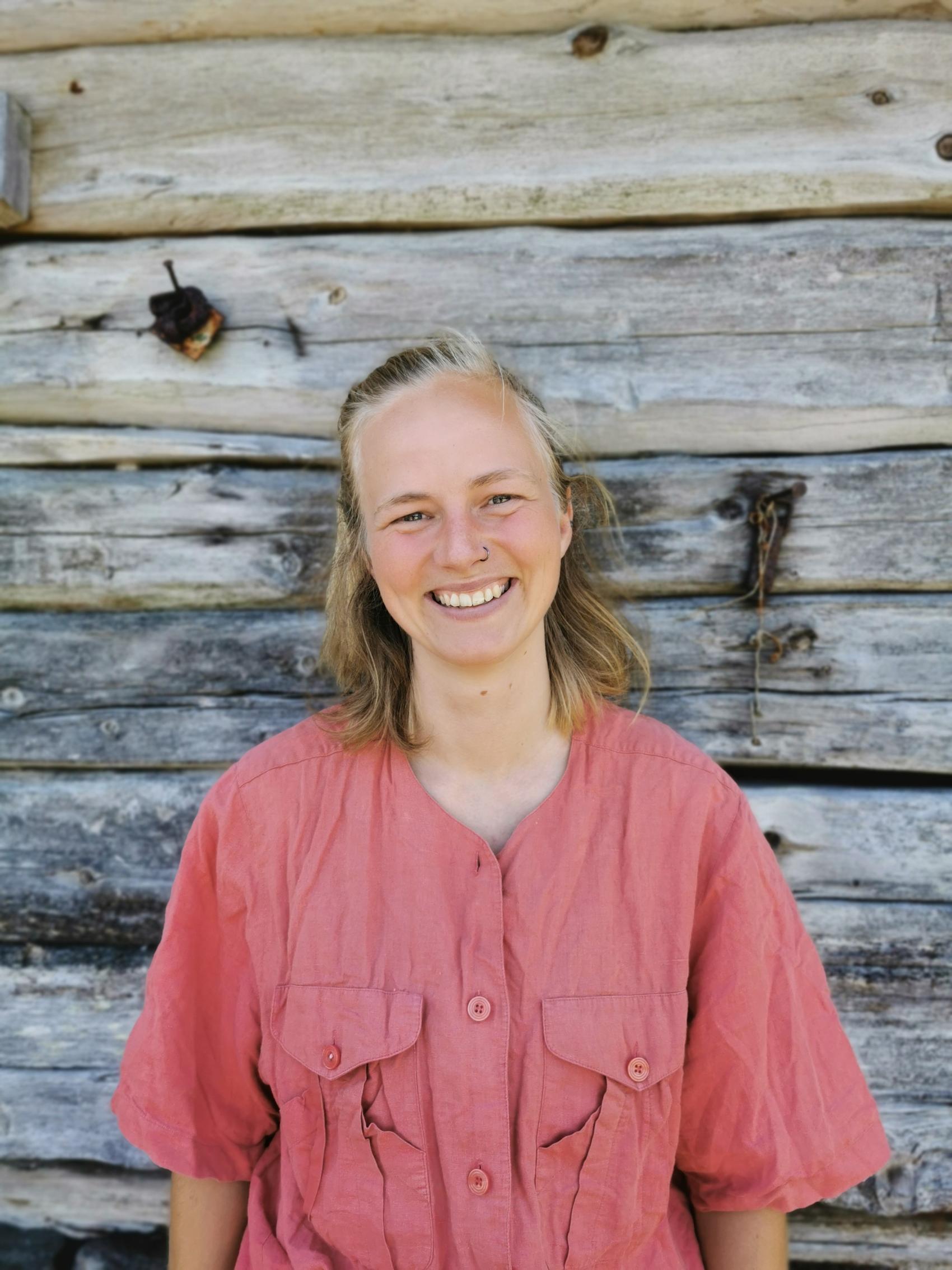
Thesis title:
Directed endozoochory: a hitchhiker's guide to successful sexual reproduction in clonal ericaceous plants
Trial lecture topic:
The importance of trophic interactions for biodiversity and ecosystem functioning in boreal forest and tundra ecosystems
Evaluation Committee:
- Professor Daniel Garcia, Faculty of Biology of Organisms and Systems, University of Oviedo, Spain
- Associate Professor Siri Lie Olsen, Faculty of Environmental Sciences and Natural Resource Management, Norwegian University of Life Sciences
- Professor Erlend Birkeland Nilsen, Nord University
Supervisory Committee:
- Main supervisor: Associate Professor Sam Steyaert, Nord University
- Co-supervisor: Associate Professor Rakel Blaalid, Nord University
- Co-supervisor: Associate Professor Amy Elizabeth Eycott, Nord University
- Co-supervisor: Researcher Shane Frank, University of South-Eastern Norway
- Co-supervisor: Professor Kari Klanderud, Norwegian University of Life Sciences
About the thesis:
Berries are not just a treat for humans – they are also a vital resource for many animals. From small insects to large bears, creatures in temperate, boreal, and alpine habitats across the northern hemisphere rely on the nutritious bounty provided by berry-producing plants in the heather family. In return, animals help plants spread by moving and depositing seeds through their digestive systems. However, scientists have long been puzzled by the 'reproductive paradox' of the heather species bilberry, lingonberry, bog bilberry and crowberry. These species produce countless berries containing viable seeds, yet rarely seem to reproduce through seeds themselves.
In this thesis, we show that seedling establishment of berry-producing species is actually relatively common when the behavior of animals is considered and that at least two pathways to sexual reproduction exist. By opportunistically consuming berries and carrion, scavenging animals provide seed dispersal directed towards carcasses, which during decomposition creates viable sites for seedling recruitment. Meanwhile, passerine birds direct seed dispersal towards perching points on tree stumps, another form of decomposing microsite that is a viable location for seedling establishment for berry-producing heather plants. Our findings add to the growing body of evidence that highlights the vital interdependence between animals and plants.
Trial lecture 10:15 - 11:05
PhD defence: 12:15 - 15:00
The PhD trial lecture and defence are open to the public. The thesis is available upon request. Please contact Jeanett Stegen.