


(Working) Title: Playing for a greener future? Environmental advocacy through football
Frida's PhD project examines pro-environmental engagement and action across different, yet interconnected, levels of international football. The overall objective is to investigate how and why professional football players engage in environmental advocacy within and through football, and how organisations (i.e. clubs and federations) and national governing bodies perceive and respond to their engagement.
Why is this research relevant?
The findings from my research can give insight into the complex and holistic nature of environmental engagement and action, considering the interplay of individual, social, and structural factors that shape such involvement. These insights can support intended pro-environmental societal change towards fulfilment of the sustainable development goals outlined by the UN.
(Working) Title: “Bridging worlds”: Understanding journalists’ role in rural communities of Norway and Spain
On comparing two different media ecosystems, such as Norway and Spain, I try to uncover the similarities in vivid experiences and professional self-perceptions that journalists established in rural communities have. In other words, these media professionals share similar problems and dilemmas in their practice, without the cultural and professional differences that exist between both countries being that important. To do this, I have visited and interviewed journalists and editors from Norway and Spain and, in addition, asked some of them to deliver photo diaries.
Why is this research relevant?
Rural communities have had little attention from the academic community historically. However, the turn taken in the last decades has helped us to acknowledge the special challenges and characteristics of these spaces. In any case, there is still a lot to do, and this includes the journalism and communication field, where little by little more researchers are raising their voice to protect local journalism as a fundamental tool to preserve healthier democratic dynamics in small communities.
(Working) Title: Feeling victimhood: understanding anti-feminism among men’s rights activists on Reddit
I study men’s rights activists on an anti-feminist online community where they believe we live in a society that oppresses men and privileges women. I am trying to find out how this feeling of being oppressed comes about. To do this, I research how men’s rights activists view men’s position in society and how that relates to their views on feminism. How do they portray gender relations in contemporary society? How do they define gender equality? What do they think feminism is? Why do they blame feminism for men’s problems?
Why is this research relevant?
Recently, we have seen an increase in anti-feminist and misogynistic online communities that speak to men and boys who feel disenfranchised in the face of changing society. Understanding how these communities think is vital for protecting gender equality, and for addressing the issues that make these communities attractive to men.
(Working) Title: Always-on? – Interactions between elite cyclists and digital technologies
In elite sports, the pursuit of performance optimisation has become increasingly intertwined with the systematic application of digital technologies to track and monitor various aspects of athletes’ lives and bodies — from heart rate and sweat production to sleep patterns and nutrition intake. The overall aim of my PhD project is to examine how elite cyclists experience the use of digital technologies, and what implications the production of personal data has for their everyday lives.
Why is this research relevant?
The spread and intensification of personal data about individuals reflects a broader societal tendency toward datafication. This research is societally useful to better understand how individuals experience and handle the transformation of everyday activities into data. It also sheds light on the tensions and implications involved in the circulation of personal data from individuals into social spheres, insights that are important for developing more meaningful and responsible data practices.
(Working) Title: Witchcraft Trials and the Production of Knowledge: Nordic Historiography in Sociological Perspective
This PhD project investigates how witchcraft trials in early modern Nordic history have been researched and interpreted within academic scholarship. The project examines how historical knowledge about these events has been produced over time in the Nordic countries, compared with the wider European context. It explores how scholars have understood and narrated witchcraft trials, and how these choices reflect broader historical, cultural, and disciplinary contexts. The project also considers how this body of research shapes collective memory and public understanding of the past.
Why is this research relevant?
The aim of the thesis is to produce a historiographical overview of the research on Nordic witchcraft trials as a tool for further research in the field. It also aims towards a better understanding of how knowledge about the past is created, legitimised, and maintained, both within academic research and in wider cultural discourse. By focusing on witchcraft trials as a case, the project sheds light on the mechanisms through which certain versions of the past become accepted as truth in specific times and places. It reflects on why witchcraft trials continue to fascinate us today, and how they connect to a broader human tendency to return to the past, whether it’s through personal memory, cultural narratives, or historical inquiry.
(Working) Title: Arctic Resilience: How Resilience Manifests through Mobility Networks across two crises in the Arctic
I study the connection between the built environment and our capacity to respond to crisis and disaster in the Arctic. The way we construct critical infrastructure and social spaces plays a large role in secure, ethical, and timely disaster response. I specifically research mobility networks across two crises: first, cross-border networks built during World War 2 near Narvik to facilitate resilience, resistance, and evacuation; and second, regional networks around Kiruna that are allowing the city’s mobile response to human-induced environmental catastrophe as the land becomes unstable due to mining.
Why is this research relevant?
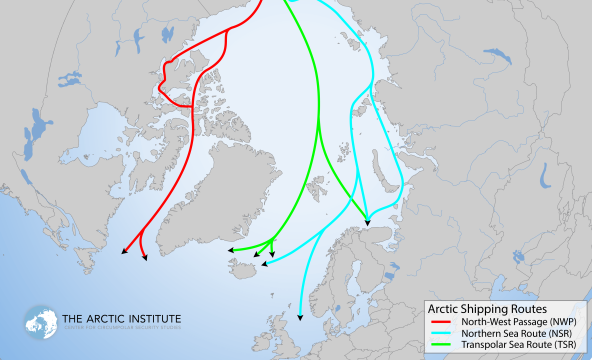
The potential for crisis in the Arctic is increasing due to climate change, geopolitical insecurity, isolation and vulnerability. The security situation between Europe, the United States, and Russia is deteriorating, especially in Greenland and the Scandinavian Arctic. Environmental destruction due to permafrost thaw, coastal erosion, glacial melt, and sea-ice loss is laying the groundwork for long-term crisis in many Arctic communities. Local response to crisis in remote northern settlements must be self-sufficient as vulnerable connections to healthcare and emergency resources in the south are easily lost. Understanding current and past crisis can help us build and prepare for the next.
(Working) Title: Parents’ and Children’s Experiences with Prolonged School Absenteeism
My PhD project explores parents’ and children’s experiences with prolonged school absenteeism in primary education. I use institutional ethnography as both a theoretical perspective and methodological approach. I examine how parents’ everyday lives are affected by their children’s school absence and how they experience collaboration with the school. Children’s own experiences are also a central part of the project, and I explore how they describe their daily lives and their relationships with friends, classmates, and teachers.
Why is this research relevant useful?
There is still a lack of research on prolonged school absenteeism, and much of the existing research focuses on identifying causes. While knowledge about causes are useful and valuable, parents’ and children’s voices are underrepresented. Understanding how school absenteeism is experienced, and what challenges these families face in their everyday lives, can provide a broader understanding of absenteeism as a phenomenon. My goal is to highlight parents’ and children’s experiences and to nuance existing research with their perspectives.