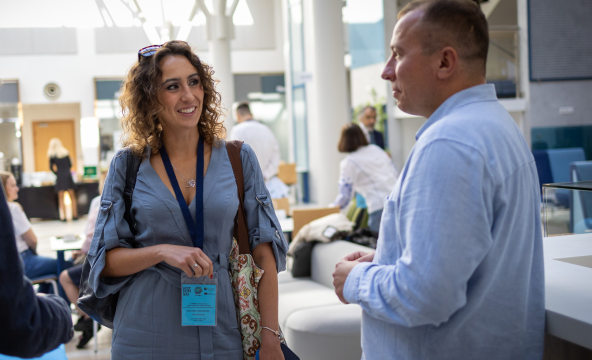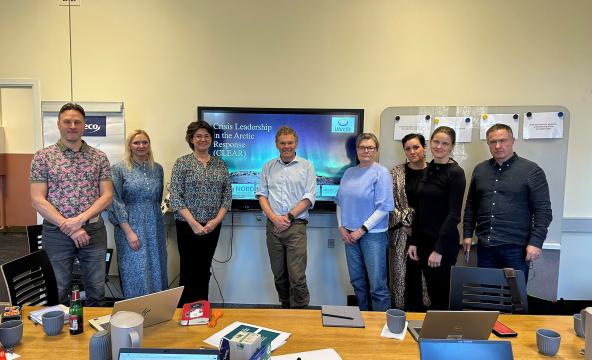


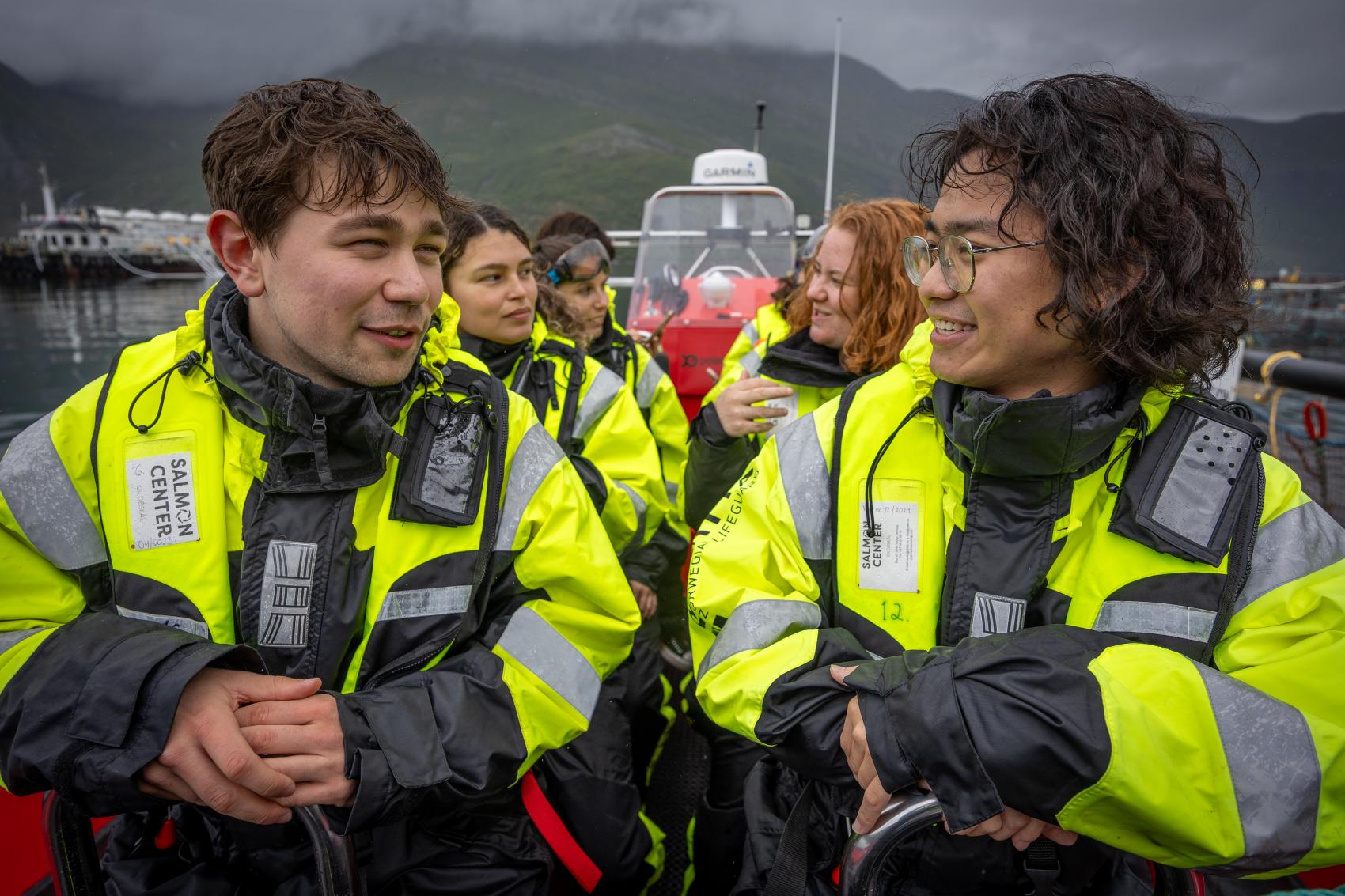
Students on the boat trip during the Arctic summer course in Bodø.
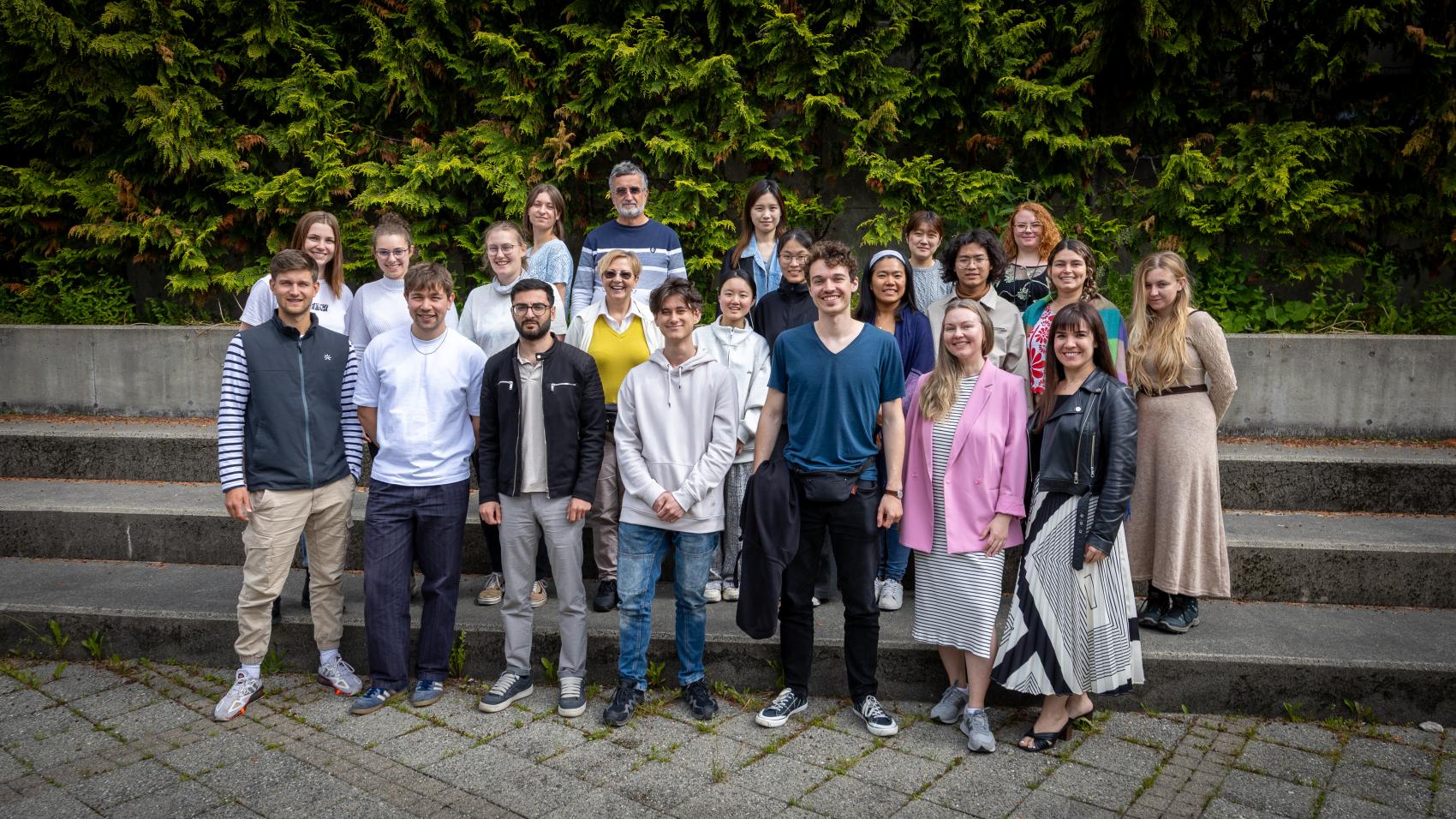
For the second year in a row, Nord University’s summer course Sustainable Blue Growth in the High North brought together a diverse group of students to explore one of the world’s most dynamic regions: the Arctic.
The one-week course combined lectures with hands-on field visits. They saw how ocean businesses in Northern Norway work with both people and nature in mind.
And interest is growing. While only 11 students took part last year, almost 100 applied this summer. Just 18 got opportunity to participate.
So what makes this course stand out? Four of this year’s students share their experience and why the High North is now firmly on their radar.
Watch the video and read the text version that follows right after:
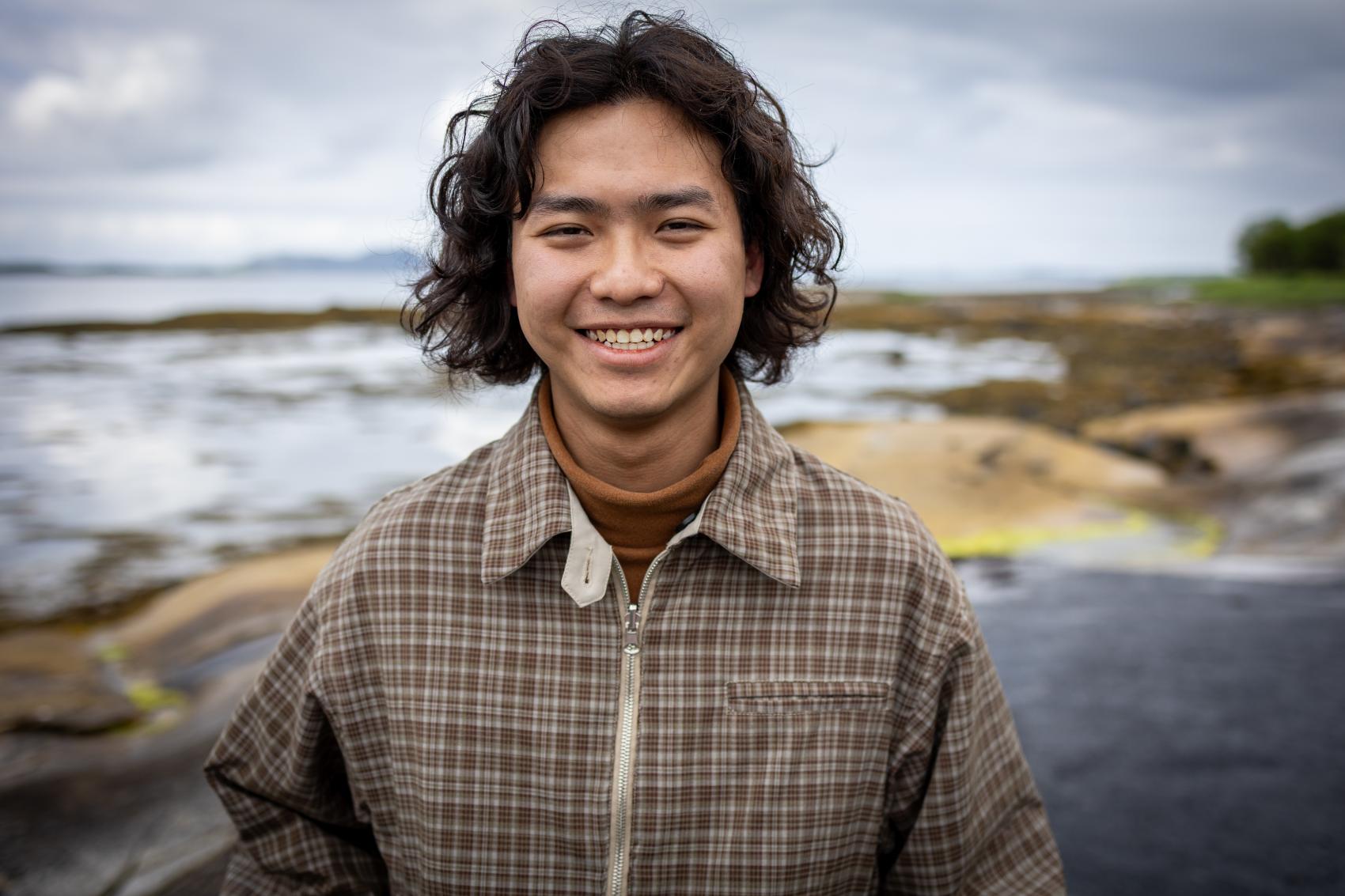
Zhao (23): – This should be how all courses are taught
Zhao Lei studies international relations in China. He was drawn to the course by the words “blue economy” and “sustainability.”
– I was thinking about alternative economic models, and how countries like Norway manage both environment and development, he says.
It was his first time in Norway.
– The air, the people, the landscape. Everything felt different. And everyone was so kind.
He says the mix of theory and field trips made a lasting impression.
– You don’t just sit in a classroom. You go out, talk to people, see how things work. That’s the part I’ll remember.
Mayte (28): – Skills for the future
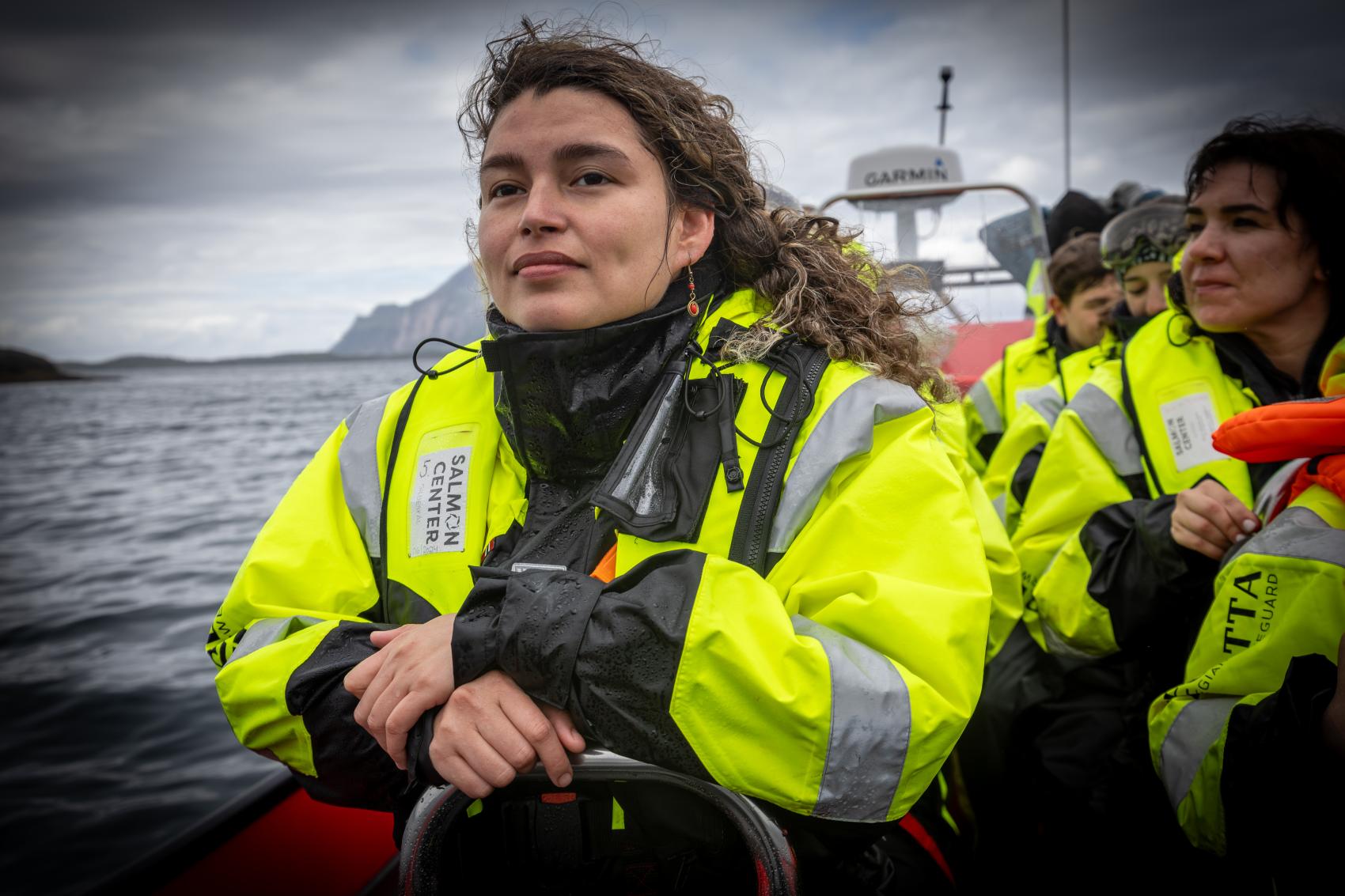
Mayte Molina is originally from Nicaragua and studies water resources engineering in Belgium. She found the course through social media and applied right away.
– I’m working on water allocation in Europe. Learning about aquaculture and fisheries in Norway just made sense, she says.
She enjoyed the lectures, but the field trips stood out the most. Especially the boat trip and the chance to hear from industry experts.
– I also learned a lot from the other students. They came from all over the world, and we had very different backgrounds.
It was her first time in Norway.
– Bodø in summer is magical. The sun never sets. People are open and the vibe is calm!
Mayte sees clear links between the course and her future career.
– I gained insight I can use as an engineer.
Felix (20): – The Arctic isn’t just a headline
Felix Wüstefeld studies environmental sciences in Germany. The chance to come to Bodø came via a university partnership in SEA-EU alliance.
– I’ve always wanted to experience the Arctic, not just read about it, he says.
Meeting students from so many different countries was one of the biggest takeaways.
– We talked about sustainability, politics, and daily life in different parts of the world. It felt very real.
He says being in the region changed how he thinks about the Arctic.
– You see the fjords, the mountains, the people living here. It’s not just a concept. It’s a place with its own challenges and solutions.
– The course gave me perspective. And being here made it unforgettable.
Clover (31): – 100% recommend it!
Clover Strickling, a public policy and administration student from Alaska, traveled thousands of miles to attend.
– This course touched on everything from fishing and maritime traffic to tourism and invasive species, topics that are incredibly relevant to my work back home.
– I loved the multidisciplinary approach, she shares.
She’s pursuing dual master’s degrees in Public Policy and Public Administration, alongside a graduate certificate in Business and Artificial Intelligence.
Whether you're coming from the earth sciences or social sciences, there’s something here for everyone
Asked what she’d say to someone considering the course next year:
– 100% recommend it. No matter your degree program, you’ll walk away with insights, new connections, and incredible experiences. It’s really wonderful.
Learning by doing
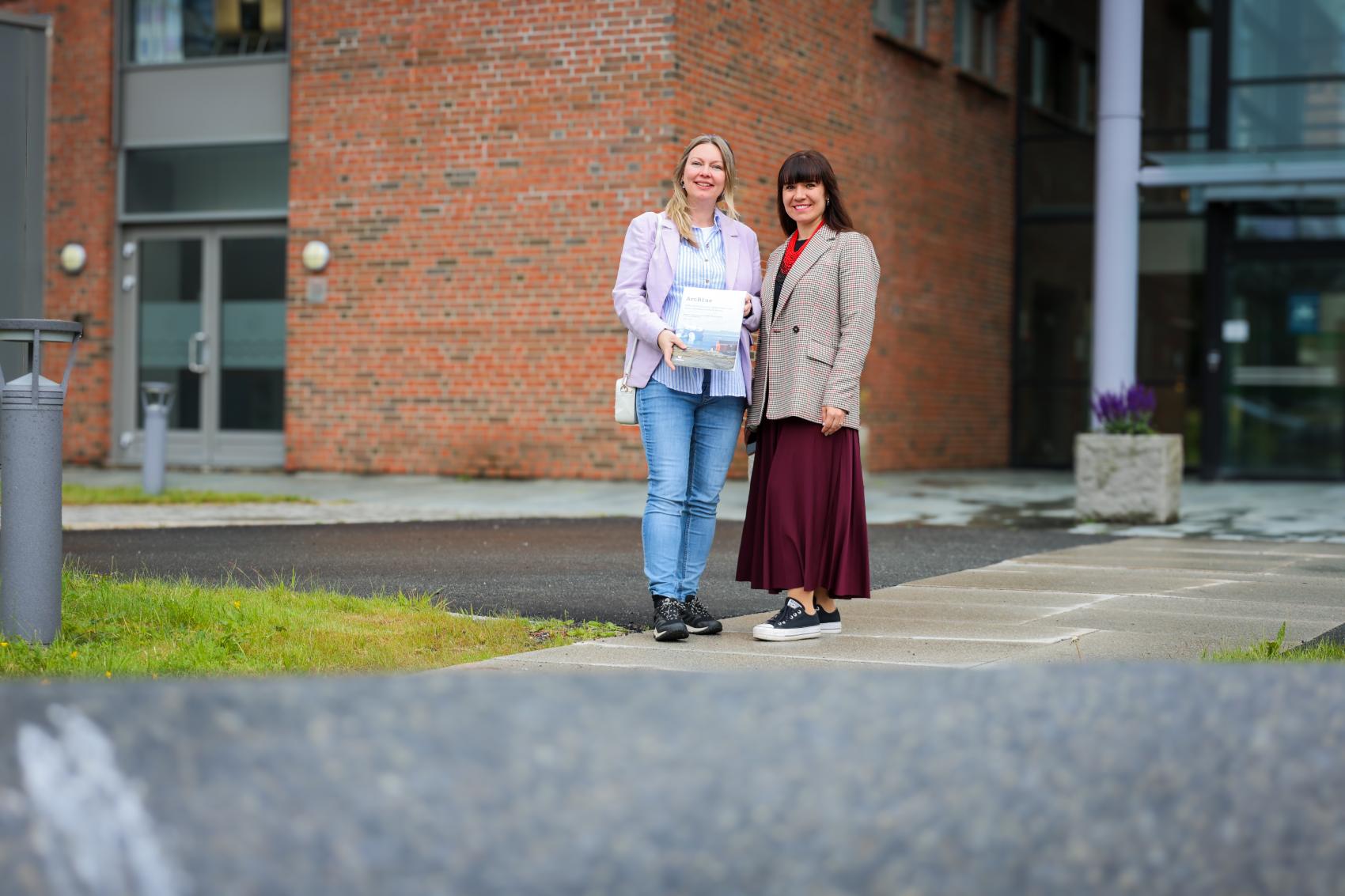
Elena Sæther and Olga Iermolenko has worked with the planning of the course for a long time.
They tell that the goal was simple: to explore how ocean industries can develop in balance with environmental sustainability and the interests of local stakeholders.
– That’s why we include field trips. Students learn more when they see things with their own eyes, Sæther says.
She's a researcher at the High North Center and is responsible for the course.
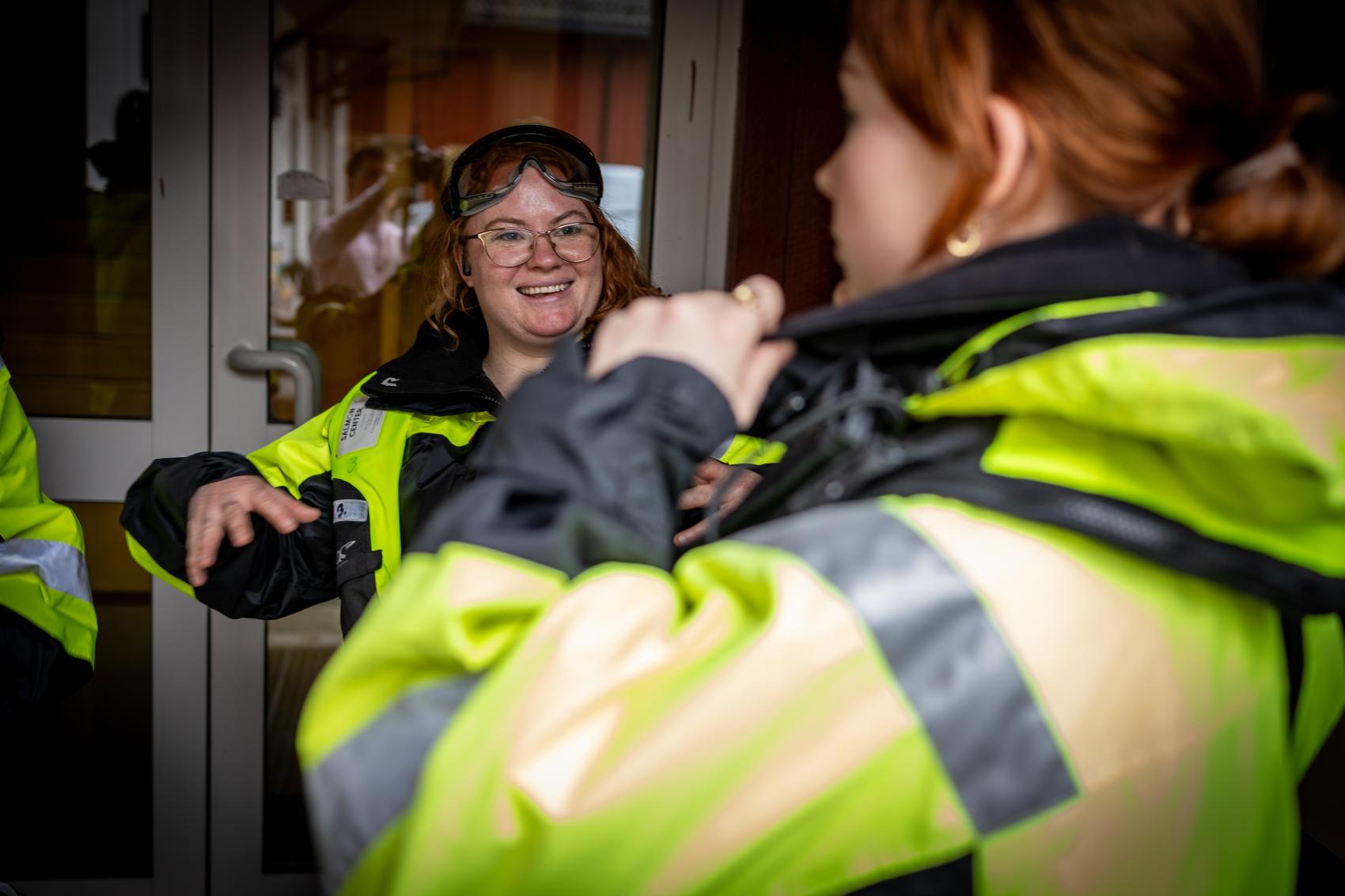
This year’s group visited the Gildeskål Salmon Center to learn about sustainable aquaculture. They also stopped at Saltstraumen, one of the strongest tidal currents in the world.
Associate professor Iermolenko hopes the experience will stay with the students long after the course ends.
– Many of them will go into government, research or business. We want them to bring sustainability with them. Not just as a word but as a mindset.
Thanks to external funding, the course covers the registration fee and offers free accommodation to the first 20 students who sign up.
– Interest is growing fast. We’re proud to offer something that’s both academic and unforgettable, Sæther and Iermolenko concludes.