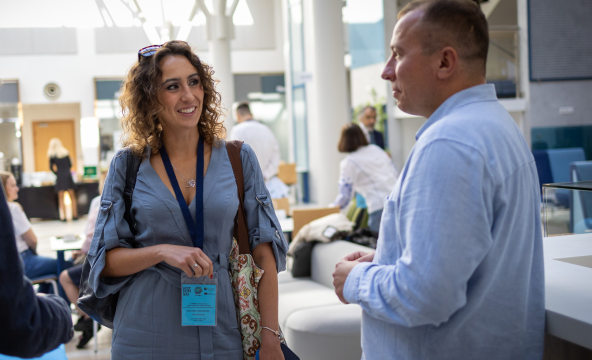


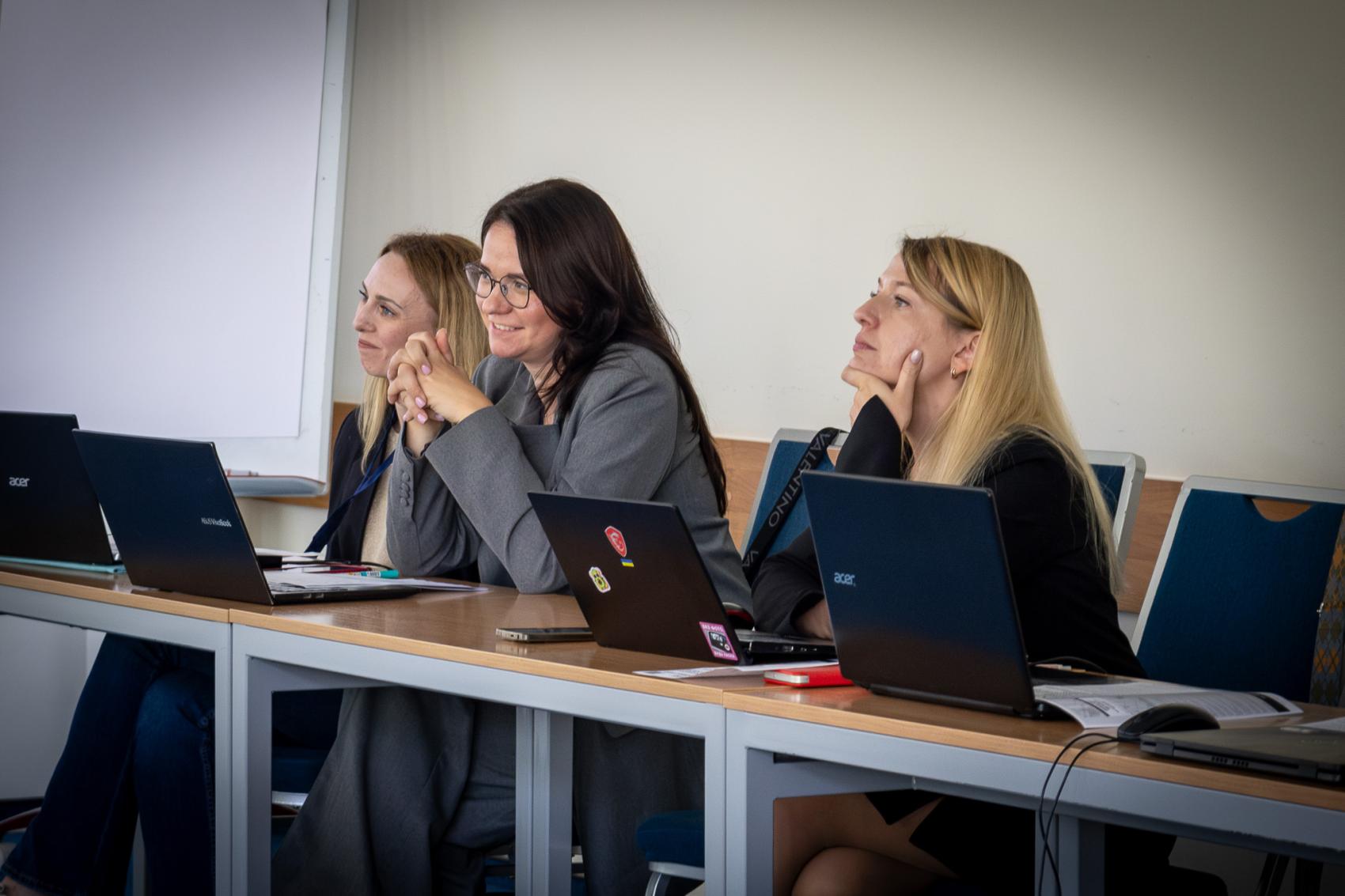
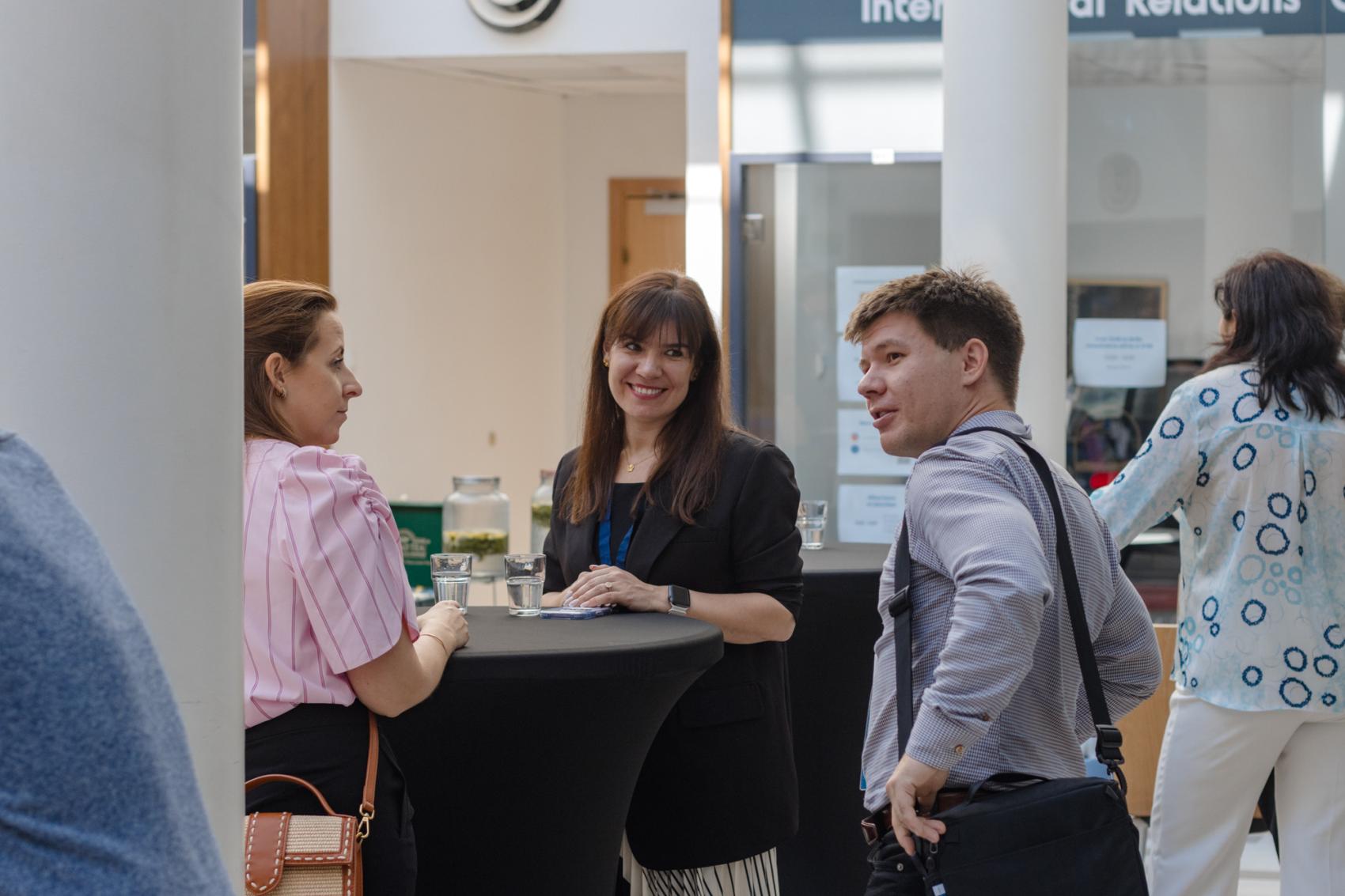
Kateryna Maksom from Chernihiv Polytechnic teaches under fire back home. Here she is photographed at Kozminski University in Warsaw. Photo: Markus Johnsen Thonhaugen / High North Center.
Kateryna Maksom's university has been bombed three times since Russia's invasion began in 2022.
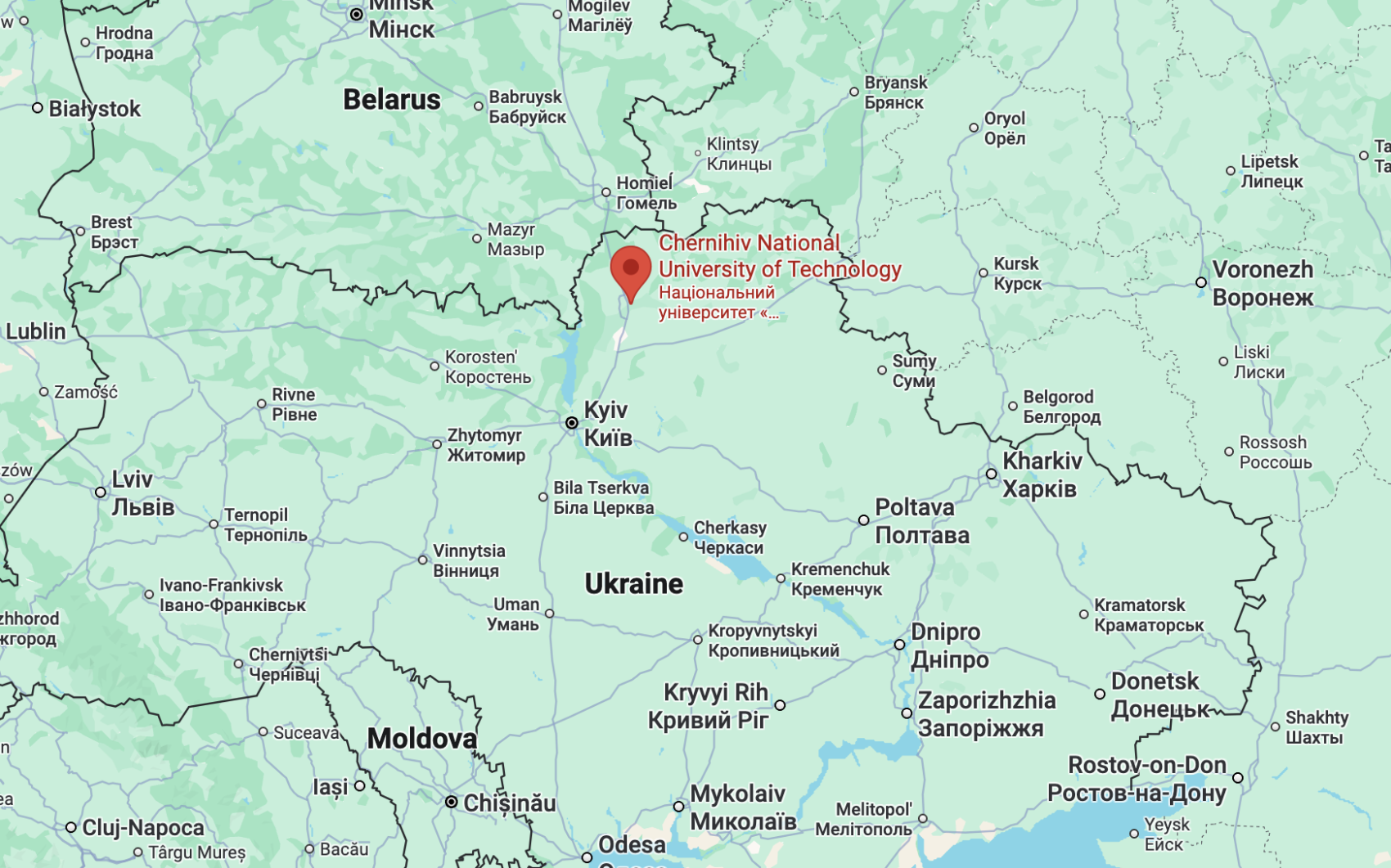
The main building at Chernihiv Polytechnic National University bears the scars of explosions. Yet classes continue - with help from TURBO, a project lead by Nord University.
– We continue to live, we continue to teach, to create, Kateryna shares.
– A university is not just a building. It's people.
Teaching Through Air Raids
As head of the department of social work, Kateryna faces impossible daily choices.
– It's very difficult because we try to teach students everyday in dangerous situations. Every day we must find some solutions.
Some days the risk of shelling is too high and classes must stop. Other days they switch to online formats when air raid sirens go off.
The IT equipment purchased under TURBO project enables hybrid teaching that can adapt instantly to security threats, she shares.
– The equipment provided through the project helps us to deliver high-quality hybrid learning, combining in-class and online participation.
Kateryna was one of more than 120 participants, who attended the 2nd TURBO Conference hosted by Kozminski University in Warsaw to discuss how universities survive, and help internally displaced people resettle and socially adapt during the war.
Education for the Displaced
For displaced people like those Kateryna works with, traditional university degrees aren't practical.
The partners in the TURBO project have therefore developed micro-credentials. These are short-term and flexible educational programs that help rebuild careers quickly.
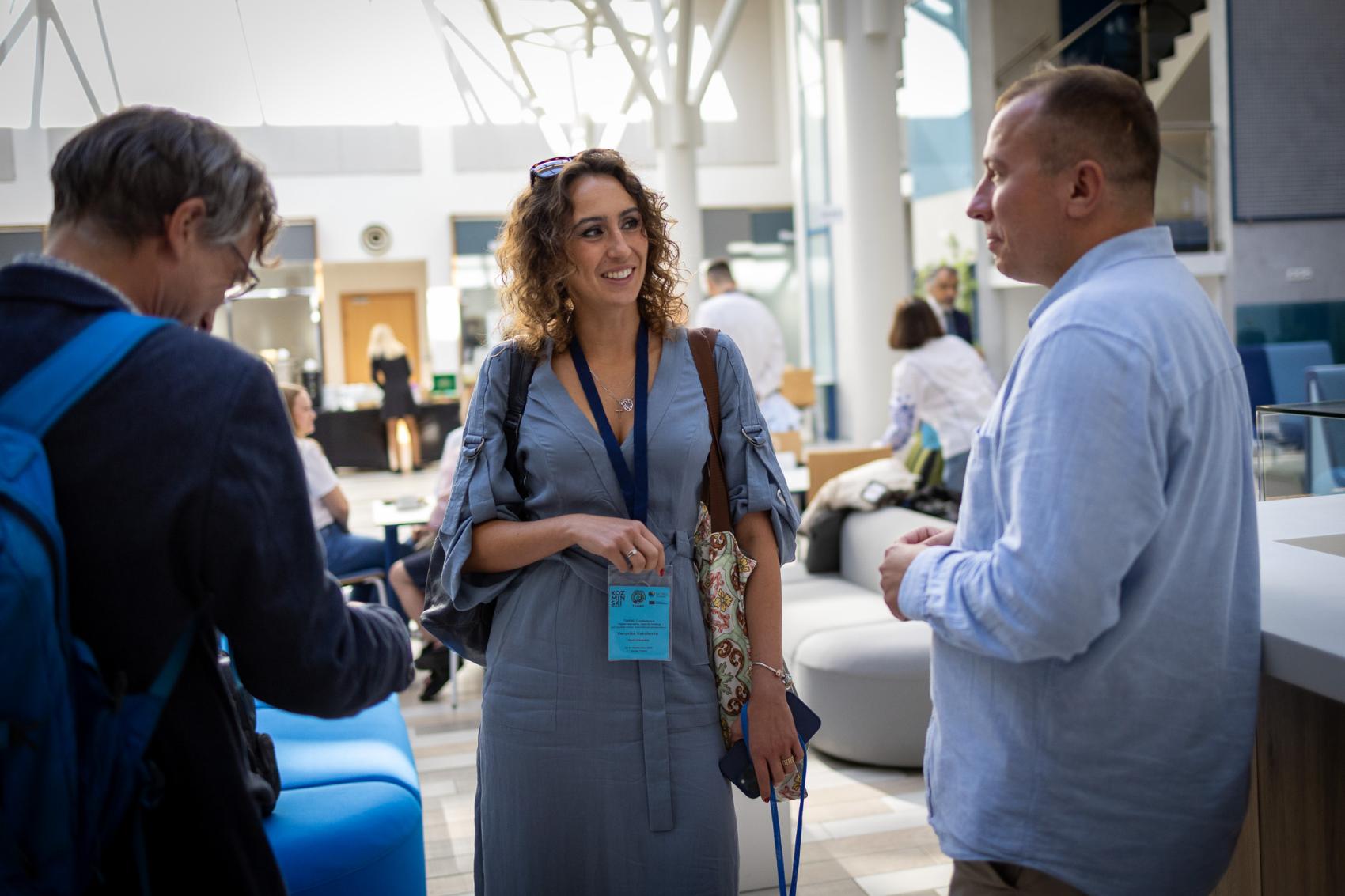
– Micro-credential programs are first of all very flexible and oriented towards the needs of participants and society, explains Associate Professor Veronika Vakulenko from Nord University Business School - the project's institutional coordinator.
Unlike traditional degrees that take years, these programs can be tailored to meet immediate needs.
The numbers show impact: 217 internally displaced persons have completed the first semester, with a target of 350 for the full year.
Seven Ukrainian universities are now running these programs.
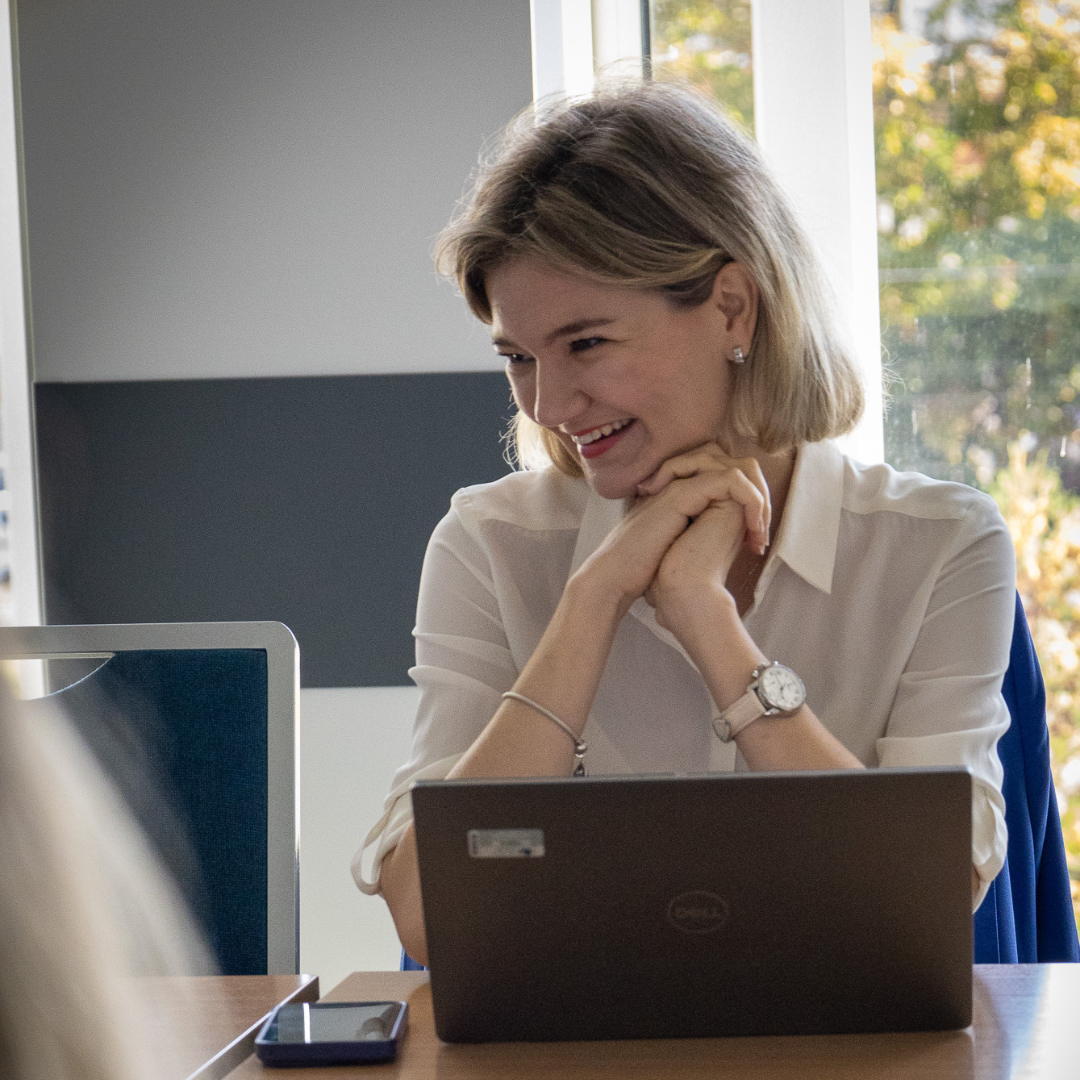
For researcher Valeriia Melnyk, who works on the TURBO project administration, seeing the results was powerful.
– It was amazing to see how people get something from our project, she shares.
Government Recognition
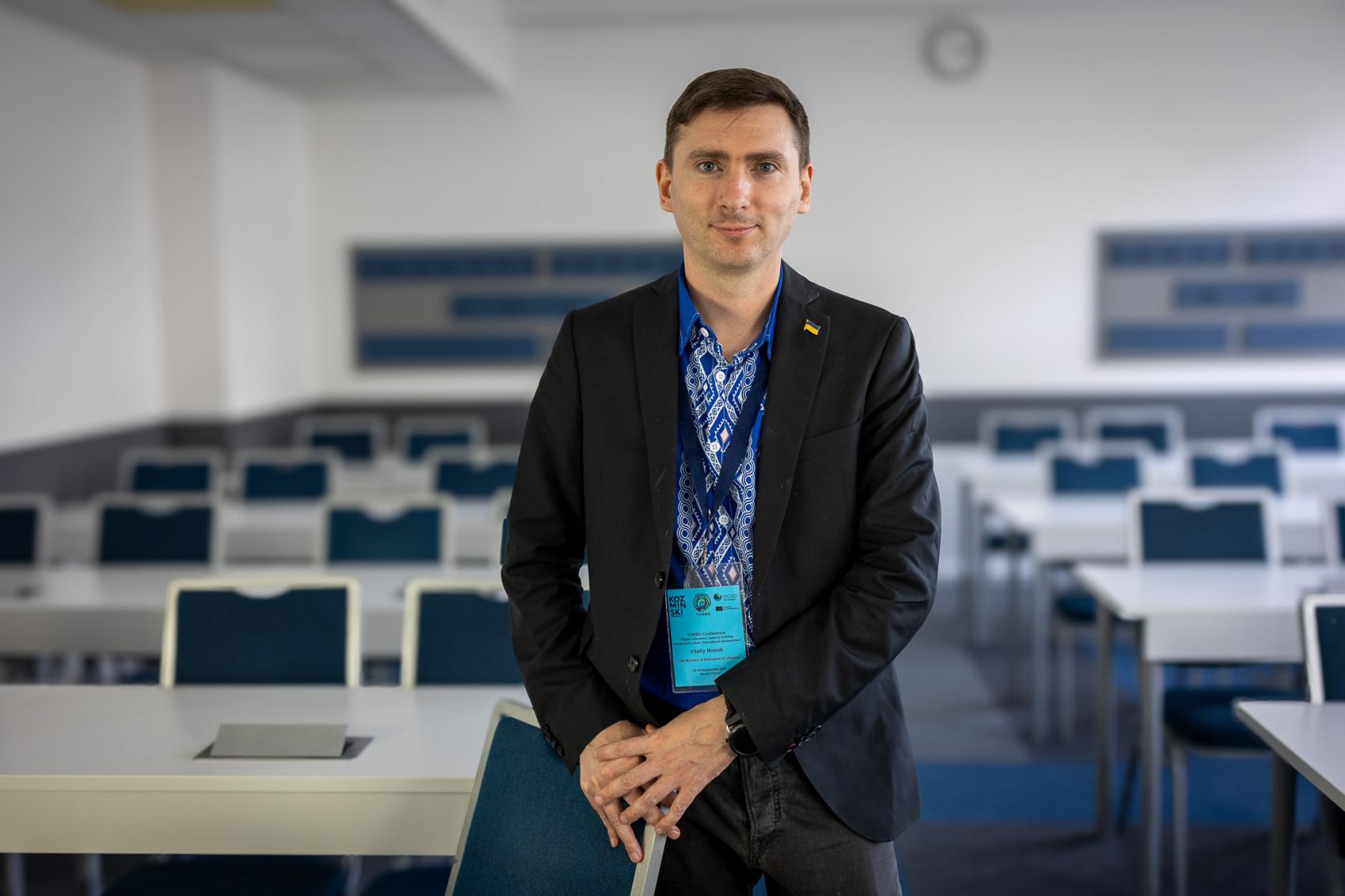
Ukraine's Ministry of Education and Science sent representatives to the conference to see TURBO's results firsthand.
Vitaliy Nosok from the Ministry calls it "a very interesting project" that could expand beyond displaced persons to help veterans transition to civilian careers.
The project could become valuable for the central government bodies and create national recommendations.
I think it definitely has a potential to be the first step to become a more larger project.
Looking Forward
Project leader, professor Anatoli Bourmistrov, sees broader implications for Europe.
Ukrainian crisis management could inform how other European countries handle future displacement, he says.

The 9.5 million kroner EU-funded project runs until December 2026, but participants are already planning beyond that timeline.
The next conference is planned to be hosted by one of Ukrainian project partners assuming the war ends.
– We all have fingers crossed that the war will be finished at that point, say Associate Professor Olga Iermolenko from Nord University Business School.
Key facts:
- The TURBO Conference was held on 22–23 September in Warsaw.
- It was opened by Øystein Bø, the Norwegian Ambassador to Poland.
- 120+ participants joined both on-site and online.
- The project is funded by the EU and runs over three years (2024–2026).
- The conference brings together international researchers, policymakers, practitioners and representatives of civil society.
- The program included keynotes, more than 40 research contributions, a dedicated program for young researchers, and more.
- Representatives from both Ukraine and Norway participated, along with experts from Poland, the USA, and several other European countries.
- Project: 101129315-TURBO-Erasmus-EDU-2023-CBHE, funded by the European Union.



Key facts:
- The TURBO Conference was held on 22–23 September in Warsaw.
- It was opened by Øystein Bø, the Norwegian Ambassador to Poland.
- 120+ participants joined both on-site and online.
- The project is funded by the EU and runs over three years (2024–2026).
- The conference brings together international researchers, policymakers, practitioners and representatives of civil society.
- The program included keynotes, more than 40 research contributions, a dedicated program for young researchers, and more.
- Representatives from both Ukraine and Norway participated, along with experts from Poland, the USA, and several other European countries.
- Project: 101129315-TURBO-Erasmus-EDU-2023-CBHE, funded by the European Union.